Table of Contents
- Introduction
- The Short Answer: A Few Days of Mild Soreness
- The First 24 Hours After Your Root Canal
- Days 2 Through 7: The Normal Healing Window
- Root Canal Aftercare Tips That Actually Matter
- Why the Crown Appointment Is Part of Recovery
- Signs That Call for a Follow-Up
- Recovery Timelines Vary, and That Is Normal
- Conclusion
- Questions About Your Root Canal Recovery?
- Frequently Asked Questions
Key Takeaways
- Mild soreness and sensitivity for two to five days after a root canal is normal and usually manageable with over-the-counter pain relievers.
- Numbness from the anesthetic wears off within a few hours. Avoid chewing on the treated side until it does.
- Most people return to work or school the next day, but the tooth itself needs a permanent filling or crown to be fully restored.
- Chew on the opposite side and avoid hard or sticky foods until the tooth gets its final restoration.
- Severe pain, swelling, fever, or a lost temporary filling are reasons to call your dentist, not symptoms to wait out.
Introduction
After a
root canal in Wellington, Florida, you can expect mild soreness and tenderness around the treated tooth for two to five days, along with a few hours of lingering numbness from the anesthetic. Most patients manage the discomfort with over-the-counter pain relievers and return to normal activities within a day.
Knowing what recovery actually looks like matters because root canals carry an outdated reputation. Modern techniques and anesthetics have made the procedure itself comparable to getting a filling, and the recovery is usually milder than people fear. What trips patients up is not pain but uncertainty: which symptoms are normal, which are not, and what to do while the tooth waits for its permanent restoration.
This guide covers the typical healing timeline, practical aftercare steps, and the specific warning signs that mean you should pick up the phone instead of waiting things out.
The Short Answer: A Few Days of Mild Soreness
A root canal removes infected or damaged pulp from inside the tooth, cleans and disinfects the canals, and seals them. The tooth's nerve is gone after the procedure, so the tooth itself cannot feel pain the way it did before.
The soreness you feel afterward comes from the tissues around the tooth. The ligament that holds the tooth in its socket gets irritated during treatment, and if there was an infection, the surrounding bone needs time to settle down. This is why the ache feels like it comes from the gum and jaw rather than the tooth.
For most patients, this discomfort peaks in the first day or two and fades steadily over the rest of the week. It should feel like it is improving, not building.
The First 24 Hours After Your Root Canal
While You Are Still Numb
The local anesthetic usually takes two to four hours to wear off. During that window, skip eating on the treated side entirely. It is surprisingly easy to bite your cheek or tongue when you cannot feel them, and those bites hurt more than the root canal ever will.
If you must eat, choose soft foods and chew slowly on the opposite side. Lukewarm soup, yogurt, and scrambled eggs are safe choices. Avoid anything hot until sensation returns, since you will not be able to tell if you are burning your mouth.
Managing the First Wave of Soreness
Take pain medication before the anesthetic fully wears off rather than waiting for discomfort to arrive. Ibuprofen is often recommended because it reduces inflammation as well as pain, but follow your dentist's specific instructions, especially if you take other medications or have conditions that rule out certain pain relievers.
Rest is reasonable for the remainder of the day, though bed rest is not required. Most patients in Wellington drive themselves home and go back to work or school the next morning.
Days 2 Through 7: The Normal Healing Window
What Normal Feels Like
Expect tenderness when you bite down on the treated tooth, mild aching in the jaw, and some sensitivity in the surrounding gum. Teeth near the treated one may feel slightly off too, which is normal and temporary.
If the tooth was infected before treatment, healing can take a little longer because the bone around the root tip is repairing itself. Slight tenderness that lingers for a couple of weeks in that scenario is still within the normal range, provided it keeps trending downward.
What Normal Does Not Feel Like
Pain that gets worse after day three, visible swelling in your face or gums, fever, or pressure that feels like it is building inside the tooth are not standard recovery symptoms. These can signal that infection remains in the canals or has spread, and they warrant a call to your dentist rather than another dose of ibuprofen.
Root Canal Aftercare Tips That Actually Matter
Written
post-op instructions from your dental office should always take priority, since they are tailored to your case. That said, a few habits make the biggest difference for nearly everyone:
- Chew on the opposite side until your permanent restoration is placed
- Avoid hard foods like ice, nuts, and hard candy, and sticky foods like caramel and gum
- Keep brushing and flossing normally, but be gentle around the treated tooth
- Rinse with warm salt water two or three times a day if your gums feel tender
- Skip smoking and alcohol for at least a few days, since both slow healing
- Take any prescribed antibiotics exactly as directed, and finish the full course
One caution worth spelling out: a root canal tooth with only a temporary filling is fragile. The access hole weakens the structure, and back teeth take heavy chewing force. Biting something hard on that tooth before it is crowned is one of the most common ways patients turn a routine recovery into a cracked tooth.
Why the Crown Appointment Is Part of Recovery
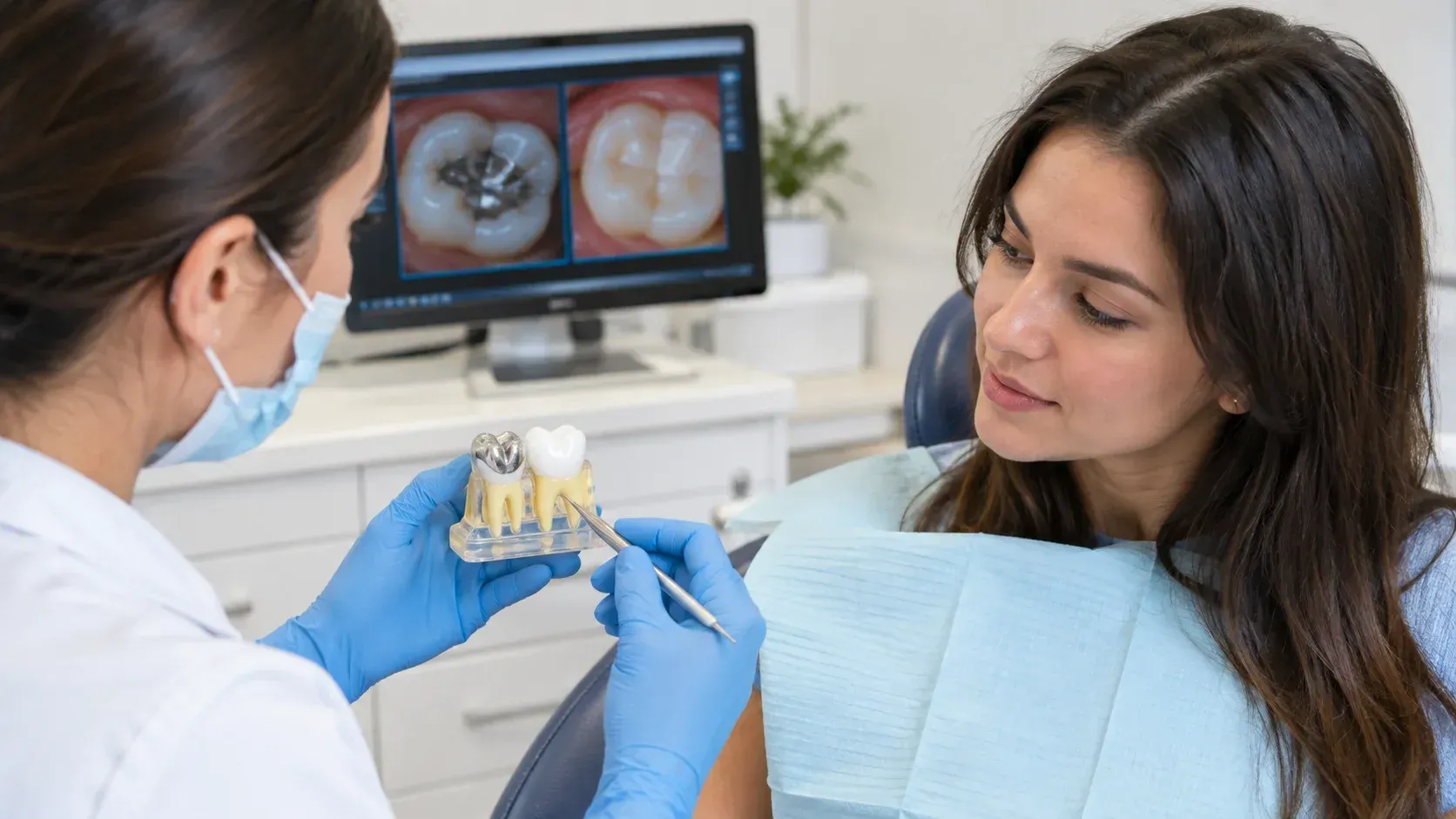
Many patients think of the root canal as the finish line. It is closer to the halfway point. The procedure removes the infection, but the tooth still needs a permanent seal and structural protection, which usually means a
dental crown for molars and premolars.
Teeth that have had root canals become more brittle over time because they no longer have an internal blood supply. Research on treated teeth consistently shows that back teeth restored with crowns last significantly longer than those left with only a filling.
The gap between root canal and crown matters too. Temporary fillings are designed to last weeks, not months. Patients who delay the crown appointment risk the temporary seal leaking, which lets bacteria back into the cleaned canals and can undo the treatment. Scheduling the restoration within a few weeks protects the work already done.
If cost is the reason for delay, say so at the office rather than quietly postponing. Reviewing insurance benefits and
financing options before the root canal appointment makes it easier to plan both steps together.