
Does Dental Insurance Cover a Custom Nightguard for Teeth Grinding?

This is different from temporary breath issues after coffee, garlic, or a night's sleep. The concern is a persistent bad taste or smell that keeps returning no matter how well you clean.
Treatment depends on the stage. For gingivitis, a professional cleaning to remove plaque and tartar, paired with improved brushing and flossing at home, is often enough to restore healthy gums.

Table of Contents
- Introduction
- What Decides Whether Your Plan Pays
- Insurance Coverage for a Custom Nightguard Turns on Classification
- Does Insurance Pay for a Night Guard From the Drugstore?
- Custom Mouthguard Coverage and Your Annual Maximum
- What to Ask Before You Commit
- If Your Plan Does Not Cover It
- Conclusion
- Ask Us to Check Your Benefits First
- Insurance and Medical Disclaimer
- Frequently Asked Questions
Key Takeaways
- Many dental plans cover a portion of a custom nightguard when it is billed as a bruxism appliance, but coverage and frequency limits vary by plan.
- A store-bought guard is a retail purchase and is generally not reimbursable at all.
- Frequency limits are the detail people get caught by, since plans often allow one appliance only once in a set number of years.
- A nightguard competes with everything else for your annual maximum, so the order you schedule treatment in matters.
- The only reliable answer comes from checking your specific plan, which the office can do before anything is made.
Introduction
Many dental plans cover a portion of a custom nightguard when it is classified as a medically necessary bruxism appliance, though the amount, the frequency limits, and the waiting periods vary by plan. A store-bought guard is a retail purchase and usually is not reimbursable at all, which is the part that surprises people.
Notice what that first sentence does not say. It does not say your plan covers it, because no article can know that. What it says is that coverage is normally possible and that it depends on how the appliance is classified, which is worth understanding before you decide between a custom nightguard and the one at the pharmacy.
What Decides Whether Your Plan Pays
Coverage usually comes down to four things, and none of them are about the guard itself.
- Classification. Whether the appliance is billed as a treatment for bruxism rather than as a cosmetic or elective item.
- Plan design. Whether occlusal guards appear in your benefits at all. Some plans include them, some exclude them outright.
- Frequency limits. How often the plan allows one, which is often measured in years rather than months.
- Documentation. Whether the chart shows findings that support the diagnosis, such as wear patterns, fractures, or reported jaw soreness.
The practice's financing page is blunt about the general picture: "Coverage varies by insurance plan, procedure, annual limits, deductibles, and other policy terms." That is as specific as anyone can honestly be in writing without your plan in front of them.
Insurance Coverage for a Custom Nightguard Turns on Classification
A nightguard gets covered as a treatment, not as a product, and that distinction is the whole ballgame.
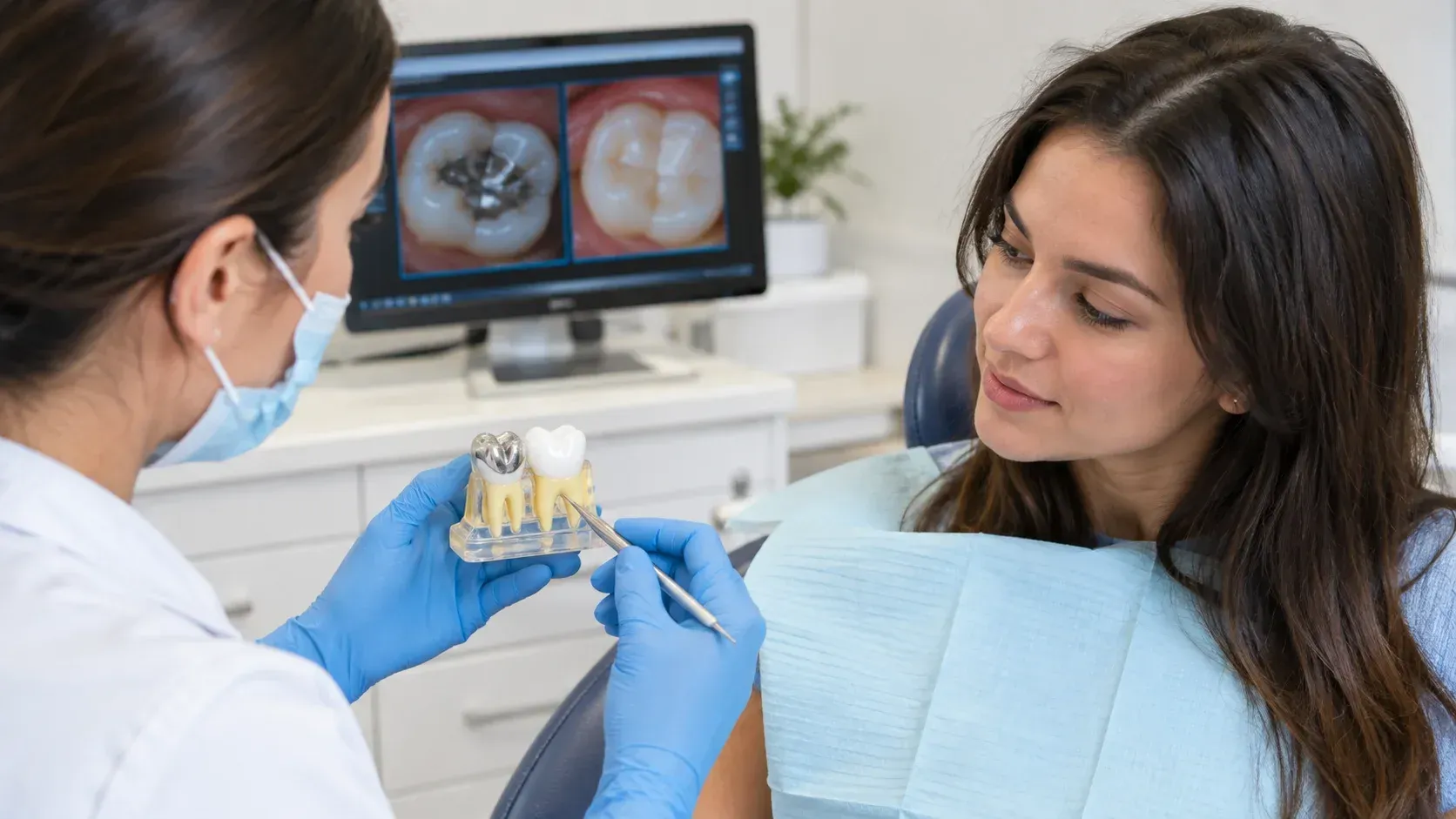
When a dentist examines someone who grinds, the chart may record findings like worn or flattened chewing surfaces, chipped enamel, fractured restorations, sore spots on the tongue or inner cheeks, jaw soreness, or morning headaches. Those findings are what support billing the appliance as a bruxism treatment.
Two practical consequences follow:
- An exam has to come first. An appliance ordered without a documented reason is harder to submit, whatever it costs.
- The same object can be covered or not covered depending on how and why it was provided. A guard made for a documented grinding problem and a guard bought off a shelf are the same shape and a different thing on a claim form.
A sports mouthguard is treated differently again. Protective athletic guards are generally not covered as a medical or dental necessity even when they are custom made, because they are preventive equipment rather than treatment for a diagnosed condition.
Does Insurance Pay for a Night Guard From the Drugstore?
Generally no. A boil-and-bite guard from a pharmacy is a retail purchase with no claim attached to it, no diagnosis behind it, and no provider submitting anything on your behalf.
There is a second cost to the drugstore version that has nothing to do with insurance. The practice's own guidance on these appliances notes that "a one-size-fits-all approach often leads to ill-fitting and uncomfortable guards," and an uncomfortable guard is one that ends up in a drawer. A guard in a drawer protects nothing.
A custom appliance starts with impressions of your teeth, which go to a dental lab where the guard is made to your bite. That is what the fit difference comes from, and it is also what creates the record a claim is built on.
Worth saying plainly: if your plan excludes occlusal guards entirely and a store-bought guard is what fits your budget, wearing something is better than wearing nothing. Just know what you are trading.
Custom Mouthguard Coverage and Your Annual Maximum
Even a covered nightguard draws against the same annual maximum as everything else, which is why timing matters more than people expect.
Two plan mechanics do most of the damage here:
| Plan mechanic | What it means for a nightguard |
|---|---|
| Annual maximum | A covered guard consumes part of the same yearly pool as crowns, fillings, and other work |
| Calendar-year reset | Unused benefits generally do not roll over into the next year |
| Frequency limit | Plans often allow one appliance only once within a set number of years |
| Waiting period | Some plans require you to be enrolled a while before certain benefits apply |
| Deductible | May need to be met before the plan pays anything toward the guard |
The practice's financing page notes that "most insurance plans have a yearly maximum, typically resetting every calendar year." If you already have other treatment planned, the sequence is worth a conversation. Sometimes splitting work across two benefit years uses the coverage better than cramming it into one.
The frequency limit is the one that catches people twice. Someone who had a guard made several years ago, lost it, and assumes a replacement is covered may find the plan says not yet.
What to Ask Before You Commit
Ask the office to check your benefits before the appliance is made, not after.
Specifically worth confirming:
- Does my plan include occlusal or bruxism appliances at all?
- What percentage does it cover, and at what point does my deductible apply?
- Is there a frequency limit, and when was the last one billed under my plan?
- Is there a waiting period I have not satisfied yet?
- How much of my annual maximum is already used this year?
- Does the plan require pre-authorization before the work?
- What is my portion if it turns out not to be covered?
Crown Dentistry of the Palm Beaches accepts most PPO insurances, and as the office puts it, you can "bring your insurance information to our office, and our Patient Care Coordinator will assist you in understanding the coverage you're entitled to." Initial consultations are free, so the benefits question can be answered before you commit to anything.
If Your Plan Does Not Cover It
You still have options, and they are worth knowing before you default to the pharmacy aisle.
- Third-party financing. The practice partners with CareCredit and also offers Sunbit, and the CareCredit option advertises up to 12 months of no interest for eligible applicants.
- Payment arrangements. The office's own guidance notes that eligible patients may be able to spread payments over an agreed period.
- Benefit-year timing. If your maximum is spent, scheduling after the reset may change the answer.
- Treating the cause alongside the symptom. A guard protects teeth from grinding. It does not stop the grinding, and stress, sleep quality, and bite factors are worth discussing at the same visit.
That last point deserves emphasis because it affects the value of the whole purchase. A nightguard is protective equipment for your teeth, not a cure for bruxism, and anyone selling it as a cure is overstating it.
Details on payment and financing options are on the practice's financing page, and CareCredit's own terms are published at carecredit.com.
Conclusion
Coverage for a custom nightguard is common but never automatic, and the deciding factors are classification, plan design, frequency limits, and what is left of your annual maximum. The useful move is not to guess from an article or to default to the drugstore. It is to have the grinding looked at, let the office check the plan, and find out what your actual number is before anything goes to the lab. If you are already noticing the signs of grinding at night, that exam is worth having regardless of what the plan says.
Ask Us to Check Your Benefits First
If you are grinding at night, ask us to check what your plan covers for a custom nightguard before you buy one at the drugstore. Crown Dentistry of the Palm Beaches offers free initial consultations and accepts most PPO insurances. Call 561.964.2002 or bring your insurance information in and we will look it up. Dr. Saitta and Dr. Cohen have been practicing in Greenacres since 1987.
Insurance and Medical Disclaimer
This article describes how dental benefits commonly treat occlusal and bruxism appliances. It is not a statement about your plan, a guarantee of coverage, or a diagnosis. Plan terms, exclusions, frequency limits, and waiting periods differ by carrier and by policy, and your plan documents and carrier are the authority on what you are covered for. Talk to Dr. Saitta, Dr. Cohen, or your own dentist about whether a nightguard is appropriate for you.
Frequently Asked Questions
Does dental insurance cover a custom nightguard?
Often partially, when it is billed as a treatment for bruxism rather than as an elective item. Coverage amounts, frequency limits, deductibles, and waiting periods all vary by plan. Have the office verify your specific benefits before the appliance is made.
Why would a plan deny a nightguard?
Common reasons include an outright exclusion for occlusal guards, a frequency limit that has not reset, an unmet waiting period, an exhausted annual maximum, or insufficient documentation supporting the bruxism diagnosis. A denial is not always final, so ask why.
Is a store-bought night guard covered by insurance?
Generally not. A pharmacy guard is a retail purchase with no diagnosis or claim behind it. It also tends to fit poorly, and a guard that is uncomfortable rarely gets worn, which undercuts the reason for buying one in the first place.
Are sports mouthguards covered too?
Usually not, even custom ones. Athletic guards are treated as protective equipment rather than treatment for a diagnosed condition, so they sit outside most dental benefits. Ask your plan directly, since terms vary.
Will a nightguard stop me from grinding?
No. It protects the teeth from the effects of grinding and clenching rather than stopping the habit itself. Stress, sleep quality, and bite factors are worth discussing at the same appointment if grinding is an ongoing problem.
Recent Posts