

How Do You Know If You Need a Dental Crown in Greenacres, Florida?

andrewmoats440 • August 14, 2026

A light gold-colored circular arc over a white background.

Share this article

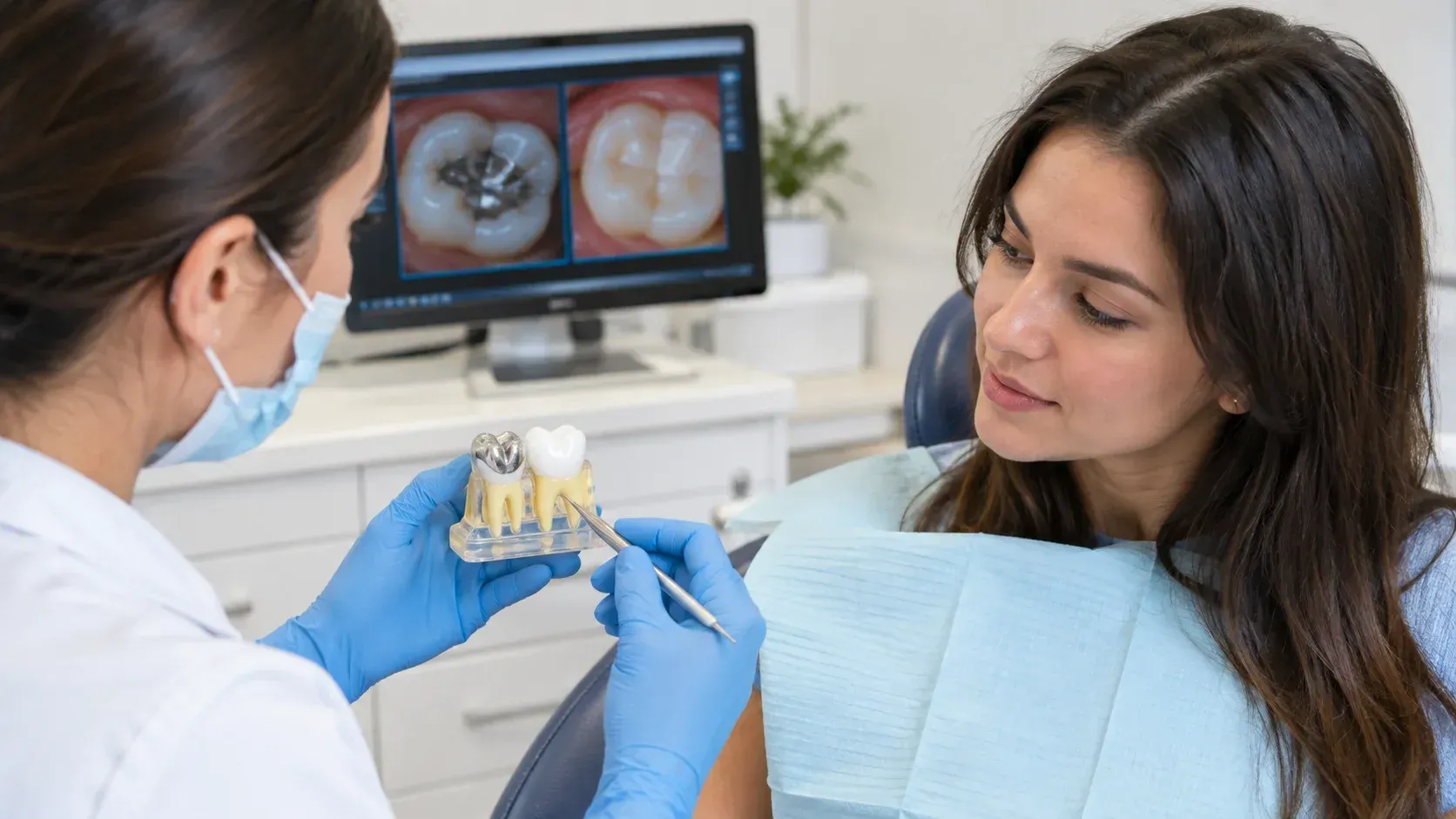
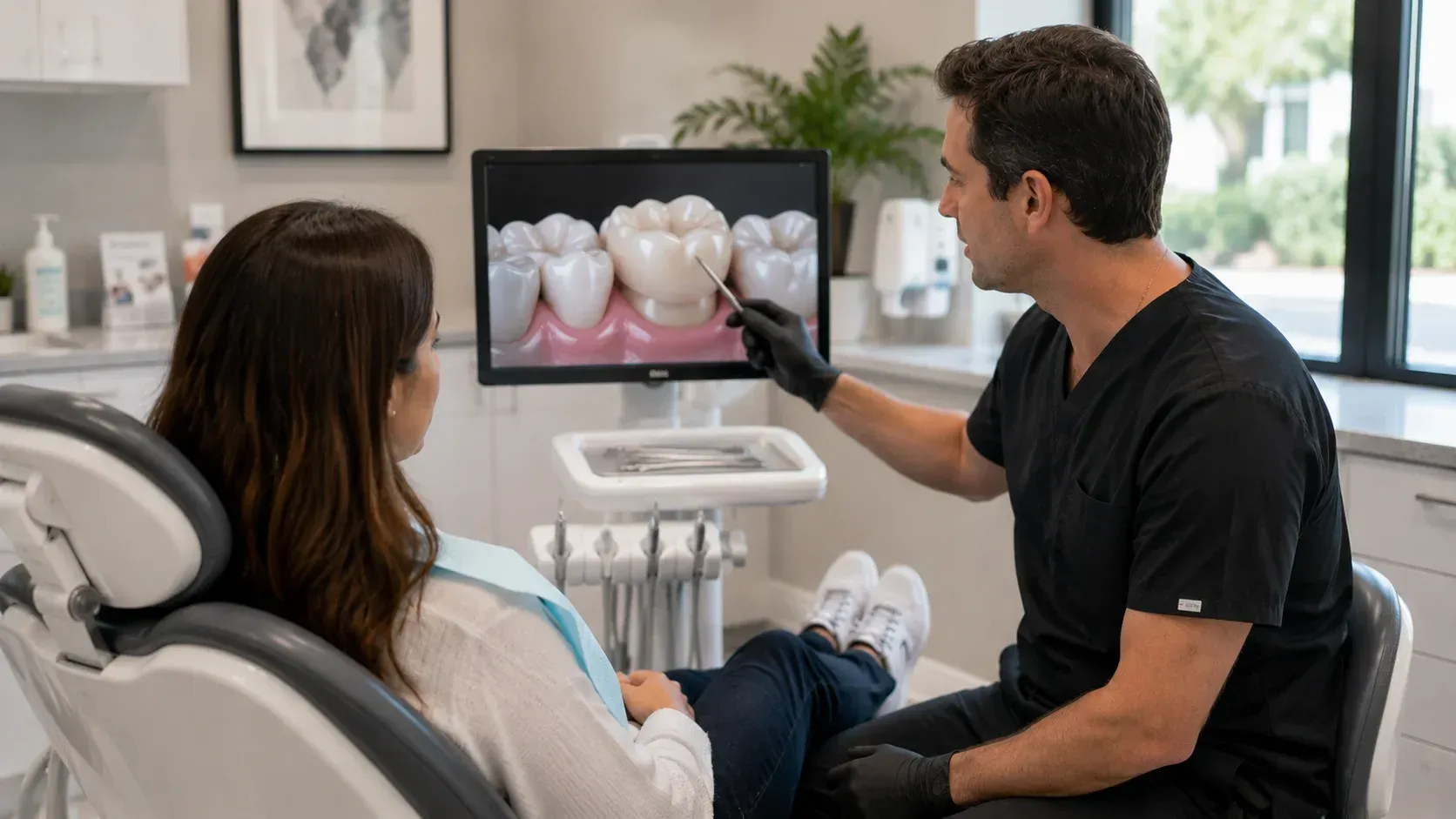
Dentist showing tooth model on screen to patient who may need a dental crown.

Table of Contents

  1. Introduction
  2. The Short Answer: When a Filling Is Not Enough
  3. Common Signs You May Need a Dental Crown
  4. What a Dental Crown Actually Does
  5. How a Dentist Decides If You Need One
  6. The Dental Crown Procedure, Step by Step
  7. When a Crown May Not Be the Right Choice
  8. Caring for a Crowned Tooth
  9. Conclusion
  10. Book a Discovery Call
  11. Frequently Asked Questions

Key Takeaways

  • A dental crown is usually recommended when a tooth is too damaged for a filling but still healthy enough to save.
  • Common signs include a cracked or fractured tooth, a large cavity, a broken tooth, worn enamel, or a tooth that has had a root canal.
  • Only a dentist can confirm whether a crown is the right choice after an exam and X-rays.
  • The procedure typically takes two visits, though same-day crowns are available in some offices.
  • A crown protects and restores a tooth, but it does not make the tooth immune to decay or future problems.

Introduction

You may need a dental crown when a tooth is too damaged or weakened for a filling to fix, but still has enough healthy structure to be saved rather than pulled. The clearest signs are a cracked or fractured tooth, a large cavity, a broken tooth, badly worn enamel, or a tooth that has recently had a root canal.

This matters because a tooth in that in-between stage rarely heals on its own, and waiting often narrows your options. A crack that could be capped today can spread below the gumline over months, at which point the tooth may need to be removed instead of restored. Recognizing the signs early gives you and your dentist more ways to keep the natural tooth.

This guide walks through the signs to watch for, what a crown does, how dentists decide it is warranted, and what the treatment process looks like.

The Short Answer: When a Filling Is Not Enough

A filling works when the damaged portion of a tooth is small and the rest of the tooth can still support normal chewing. The dentist removes the decay and packs the space with material that bonds to what remains.

A crown becomes the better option when too much of the tooth is gone or weakened for a filling to hold. Instead of filling a hole, a crown covers the entire visible tooth like a cap, taking over the chewing surface and holding the remaining structure together.

The line between the two is a judgment call your dentist makes based on how much healthy tooth is left. A crown is not automatically better than a filling. It is the right tool for a specific level of damage.

Common Signs You May Need a Dental Crown

A Cracked or Fractured Tooth
Cracks are one of the most common reasons for a crown. A tooth that hurts sharply when you bite down, then stops when you release, may have a crack that flexes under pressure. A crown holds the pieces together and stops the crack from spreading.

Not every crack needs a crown, and some hairline cracks in enamel are harmless. The concern is cracks that reach the inner layers of the tooth.

A Large Cavity or Existing Large Filling
When decay is extensive, or when an old filling takes up most of the tooth, there may not be enough solid structure left for another filling to hold. Big fillings also weaken the tooth around them, which makes future fractures more likely. A crown wraps and reinforces what remains.

A Broken or Worn-Down Tooth
Teeth chip and break from injury, biting hard objects, or years of grinding. Heavy grinding, common in people who clench at night, can wear enamel down until teeth are short and sensitive. A crown can rebuild the shape and restore normal biting height.

After a Root Canal
Back teeth that have had root canals usually need crowns. The treatment leaves the tooth more brittle, and molars absorb heavy chewing force. A dental crown protects the treated tooth from cracking, which is a common way root canal teeth fail without one.

Ongoing Sensitivity or Discomfort
Persistent sensitivity to temperature or pressure in one specific tooth can point to underlying damage. This sign is less clear-cut than the others, since sensitivity has many causes, but it is worth having checked rather than ignoring.

What a Dental Crown Actually Does

A crown restores three things: strength, function, and appearance. It holds a compromised tooth together so it can handle daily chewing, and it rebuilds the natural shape so your bite works normally.

Crowns come in several materials. Porcelain and ceramic crowns match the color of natural teeth and are common for teeth that show when you smile. Metal and porcelain-fused-to-metal crowns are stronger and often used on back teeth where appearance matters less than durability.

A crown does not fix the underlying tooth in a biological sense. The tooth inside is still the tooth you had. The crown protects it and takes over the work, which is why the tooth beneath a crown can still develop decay at the edges if it is not cared for.

How a Dentist Decides If You Need One

Self-diagnosis only goes so far. Many signs of a failing tooth, like a deep crack or decay under an old filling, are invisible without X-rays and a hands-on exam.

Your dentist will look at how much healthy tooth remains, whether the damage reaches the nerve, and how the tooth sits in your bite. They may tap the tooth, check it with a cold test, or have you bite on a small tool to locate a crack.

Sometimes the answer is a crown, and sometimes a smaller repair like a filling or an inlay or onlay is enough. A trustworthy assessment includes explaining why one option fits your situation better than another, along with the trade-offs of each.

The Dental Crown Procedure, Step by Step

The Traditional Two-Visit Approach
At the first visit, the dentist numbs the area and reshapes the tooth so the crown will fit over it. They take an impression or digital scan, place a temporary crown, and send the specifications to a dental lab.

At the second visit, usually a couple of weeks later, the temporary comes off and the permanent crown is checked for fit and bite, then cemented in place. The whole process is generally painless thanks to local anesthetic, though mild soreness afterward is normal.

Same-Day Crowns
Some offices use in-house milling technology to design and make a crown in a single appointment. This skips the temporary crown and the second visit. Not every case suits a same-day crown, and availability depends on the practice and the tooth involved.

 Cost and Planning
Crowns are a larger investment than fillings, and coverage varies by plan. Reviewing your insurance benefits and any
financing options before treatment makes it easier to plan, and it is a fair question to raise during the consultation rather than after.

When a Crown May Not Be the Right Choice

A crown is not always the answer, and honest dental care includes saying so. If a tooth is too far gone, with decay or a fracture extending below the bone, saving it may not be realistic, and an extraction with a replacement option may be recommended instead.

On the other end, minor damage that a filling or bonding can handle does not justify the added cost and tooth reduction a crown requires. Placing a crown means removing healthy tooth structure to make room for it, and that structure does not grow back.

There is also no guarantee a crown lasts forever. Well-made crowns often last many years, but they can loosen, chip, or need replacement over time, and the tooth underneath can still decay. Knowing this up front helps set realistic expectations.

Caring for a Crowned Tooth

A crown does not need special products, just consistent habits. Brush twice a day, floss daily, and pay attention to the gumline where the crown meets the natural tooth, since that edge is where decay tends to start.

Avoid using the crowned tooth to bite hard objects like ice or pens, and if you grind your teeth at night, ask about a nightguard to protect both the crown and your natural teeth. Regular checkups let your dentist catch a loose or worn crown early.

For residents looking into this, local dental services in Greenacres make it straightforward to get an exam and a clear recommendation before deciding anything.

Conclusion

A dental crown is generally recommended when a tooth is too damaged for a filling but still worth saving, and the signs to watch for include cracks, large cavities, broken or worn teeth, and teeth that have had root canals. None of these signs is a diagnosis on its own. Confirming whether a crown is right takes an exam and X-rays.

A crown restores strength, function, and appearance, but it is one option among several, and it does not make a tooth invincible. The most useful step is not deciding on your own whether you need a crown. It is getting a specific tooth assessed early, understanding why a particular treatment is recommended, and weighing that against the alternatives before moving forward.

Book a Discovery Call

If you have a tooth that hurts when you chew, a chipped or worn tooth, or an old filling you are unsure about, a short conversation can help you understand your options. Crown Dentistry of the Palm Beaches offers free initial consultations where you can have the tooth examined and ask questions about crowns and the alternatives, with no obligation to proceed. Call 561.964.2002 or reach out through the contact page to set up a time.

Frequently Asked Questions

  • How do I know if I need a crown or just a filling?

    It depends on how much healthy tooth remains. Fillings work for smaller areas of damage, while crowns are used when too much of the tooth is weakened or missing for a filling to hold. Only a dentist can confirm which applies after an exam and X-rays.

  • Does getting a dental crown hurt?

    The procedure is done under local anesthetic, so you should not feel pain during it. Mild soreness or sensitivity for a few days afterward is normal, especially around the gums. Over-the-counter pain relievers usually manage it.

  • How long does a dental crown last?

    Many crowns last a decade or longer with good care, though lifespan varies by material, the tooth's location, and habits like grinding. Crowns can chip, loosen, or need replacement over time, and the tooth underneath can still decay if not cared for.

  • How many appointments does a crown take?

    The traditional process takes two visits, one to prepare the tooth and place a temporary crown, and one to fit the permanent crown a couple of weeks later. Some offices offer same-day crowns using in-house technology, depending on the case.

  • Can a crowned tooth still get a cavity?

    Yes. The crown itself cannot decay, but the natural tooth beneath it can, usually where the crown meets the gumline. Daily brushing, flossing, and regular checkups help protect that edge.

  • What happens if I wait too long to get a recommended crown?

    Damage tends to progress. A crack can spread, a weakened tooth can fracture further, and decay can reach the nerve. When that happens, a tooth that could have been crowned may instead need a root canal or extraction, so early treatment usually preserves more options.

  • Are there alternatives to a dental crown?

    Sometimes. Depending on the damage, a filling, bonding, or an inlay or onlay may be enough. If a tooth cannot be saved, an extraction with a replacement may be the better path. Your dentist can explain which options fit your specific tooth.

Recent Posts

Dentist pointing at tooth display: signs of gum disease to watch in West Palm Beach.
By andrewmoats440 August 14, 2026
Learn the common signs of gum disease to watch for in West Palm Beach, FL, from bleeding gums to loose teeth, and when to seek professional dental treatment.

Dentist showing dental X-ray: What Should You Expect After a Root Canal in Wellington, Florida?
July 15, 2026
Learn what to expect after a root canal in Wellington, FL, including normal recovery symptoms, aftercare steps, healing timelines, and when to call your dentist
Dentist examining patient, How Often Should You Get a Dental Cleaning in Greenacres, Florida?
July 15, 2026
Learn how often you should get a dental cleaning in Greenacres, FL, which factors change the schedule, and how routine cleanings support long-term oral health.
Close-up of a smiling mouth with bright white teeth and glossy, red lipstick.
March 7, 2026
Take a peek at your pearly whites in the mirror. Do you notice any recent chips or cracks that can't be explained? Fractures like these may have formed during a teeth-grinding session, a condition known as bruxism. Enamel wear can also give teeth a transparent look. According to the Sleep Foundation, the prevalence of sleep bruxism in adolescents is estimated to be 15%. Here are some signs you may be grinding your teeth at night.
Mouth open for dental examination, teeth are white, dentist's tools and gloved hand visible.
March 7, 2026
Are you wondering how to maintain your oral health? Maintaining good oral health is essential for overall well-being and confidence. Regular oral hygiene practices can prevent a host of dental problems such as cavities, gum disease, and bad breath. Here are some top preventative maintenance tips to ensure your teeth stay healthy and your smile remains bright.
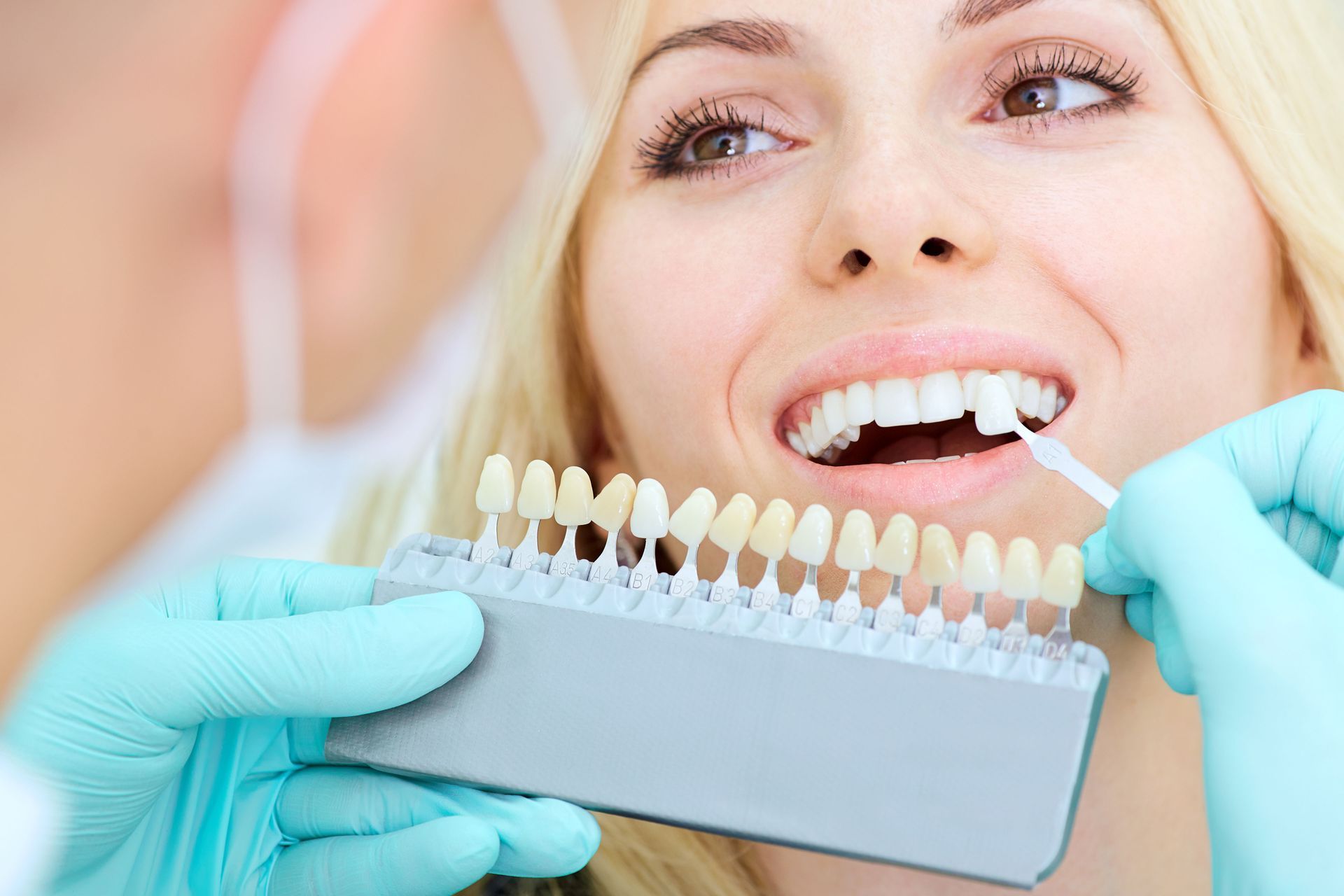
Dentist comparing shade guide to patient's teeth during a teeth whitening consultation.
January 16, 2026
Dental veneers continue to attract interest as a cosmetic option for improving tooth color, shape, and overall smile balance. Many people researching modern dental procedures want clear answers before deciding whether veneers fit their long-term goals. Questions often center on what veneers are, how long they last, and what factors influence cost. Understanding these details helps readers move smoothly from curiosity to informed decision-making, which the following sections are designed to support.